Skip to content →

Category: work

A Tin Cup Of Red Wine: Writing As Gardening

I can’t remember where I picked this tin cup up. I presume an airport somewhere in Canada. “Exit, pursued by a bear” being the famous stage direction from Shakespeare’s THE WINTER’S TALE. ( Here’s David Tennant absolutely killing Just A Minute on his first attempt, talking for sixty seconds about it.) For the writer’s wandering mind, this joke cup is in fact a writer’s cup.

I like having a few tin cups around because I don’t want to take wine glasses into the garden. I am clumsy. And working.

I haven’t done anything to this garden in probably six or seven years. Honestly, I’m quite fond of the wildness of it. But the edges are closing in, and I can’t grow food out here. So, Thursday morning, I kitted up and came out here with tools, determined to at least clear the round patio area by the east fence, which had turned into a mysterious dark glade. Now, I like a mysterious dark glade as much as the next person, probably more, but this isn’t a big garden and I need that space. As I write this, my hands and the soles of my feet are covered in hotspots and I have a full-body ache, but the round patio is clear. Once I put the PVC mini-greenhouse (bought six or seven years ago) in place, I poured myself a tin cup of red wine, sat in the shade and thought about writing.

Three or four years ago, George RR Martin had this to say about writing:

I think there are two types of writers, the architects and the gardeners. The architects plan everything ahead of time, like an architect building a house. They know how many rooms are going to be in the house, what kind of roof they’re going to have, where the wires are going to run, what kind of plumbing there’s going to be. They have the whole thing designed and blueprinted out before they even nail the first board up. The gardeners dig a hole, drop in a seed and water it. They kind of know what seed it is, they know if planted a fantasy seed or mystery seed or whatever. But as the plant comes up and they water it, they don’t know how many branches it’s going to have, they find out as it grows.

Most of my idols were architects, I think. Alan Moore had a famous “big piece of paper” for BIG NUMBERS that had every action for every character in every issue of the planned series. Here’s a photo of a photo:

Here’s a curiosity – in the early 80s, Alan visited New York, and wrote (was this in ESCAPE magazine?) about meeting Howard Chaykin and learning that Chaykin painstakingly worked out AMERICAN FLAGG’s structure in advance. There were no more details than that, but at the end of that decade Alan was structuring a book on a vast graph. I always strongly suspected that Chaykin influenced Alan to be an architect. One of Alan’s earlier touchstones was Thomas Pynchon, whom I conceive of as more a gardener. I start to see James Joyce in some of Alan’s latter work, and ULYSSES is a work of architecture.

Delany & Chaykin, EMPIRE

I wanted to be an architect, deep down. When Jonathan Hickman appeared, his ability to visualise and fling these huge structures up into the air was a fascination to me. (PAX ROMANA, perhaps his least-loved work, is one I revisit every couple of years – in my head, it links to Matt Wagner & Tim Sale’s wonderful “Devil’s Reign” sequence, and back to Delany & Chaykin’s EMPIRE.)

Hickman, PAX ROMANA

It was a shock to me when William Gibson turned out to be a gardener. I remember him talking about SPOOK COUNTRY, starting with a compelling image that stuck with him, and just… writing. Discovering what the book was about as he wrote it.

As a writer, I am, I think, a bad architect. I make myself start with an outline, and then I wander. I plough the fields and scatter. A case in point is CASTLEVANIA Season 3. I knew pretty much where I needed every character to be by the end of the season in order to achieve the strict requirements of the fourth and final season. Everybody had to be in place for the last act of the story. I ploughed the field in straight lines. But the field was way over there, and I just went over there in any way that felt right. And, frankly, I think I ended up kind of next to the field in question, rather than at its gate.

I’m bad at plans. I try, but I always end up winging it.

But I grew a lot of stuff along the way – the Flyseyes monologue, which I think was one of the most successful pieces of writing in the whole season, just kind of happened. Grew out of the dirt I’d tilled. Structurally, it was probably one of the worst things I could have done. But stories are not structure. Structure is a set of signposts, and only in the most austere modernist nouvelle roman would you find a set of signposts presented as a story. It’s your story. You can touch each signpost by any route you choose, and decide to skip one or two if they’re not necessary to the journey. Or even if not necessary to the journey that pleases you. And you can pause to raise a plant or two along the way.

Sitting out here in the garden, it may be, at this late stage, that I have to accept that I’m not a great architect, and perhaps it’s okay to be a bad gardener. Build the raised bed, score the lines with a trowel, scatter the seed and accept that the wind and the rain will cover the lines and that I won’t know what grows out of it all until it happens.

Comments closed
It Doesn’t End When You Think It Does: The Penultimate Chapter In Serial Storytelling

Read enough tv reviews, and you’ll start to see the same observation pop up – have they left enough space to wrap everything up in the final episode? This usually follows observations about how slow the story is, or how it’s taking its time, you know the kind of thing.

Reviews are, of course, not the best yardstick of a successful piece of art. Fundamental misunderstandings of how stories work are standard for the field. But if enough different people tell you it’s noon all at the same time, it might be worth looking up at the sky.

Thing is: the final episode doesn’t have to be where all the work gets done.

Instead, consider the possibility that your big climax should be planned for the episode before last.

Outwardly, this achieves a couple of things. The big bang happens where it is possibly least expected, which is often good. It also allows you to spend the final episode “wrapping everything up” by getting to spend extra time with the surviving characters, sitting with the aftermath and closing the arcs of their journeys.

It also makes you look a lot harder at the episodes that precede it. You may find you have to let some air out of the story in order to achieve that confluence of events in the penultimate chapter. This is the “killing your darlings” that writers talk about — losing the moments and conversations and grace notes that may enchant you but do nothing to retain attention, maintain focus and drive the story forward. You may find that you suddenly have some pace and attack back in the story.

And if you can’t achieve the whole of that big confluence in the penultimate chapter after all? You do still have a whole other episode to accommodate the overspill.

Speaking personally, it was important for me to establish early in the process that the penultimate episode of CASTLEVANIA Season 4 was the one where I was going to bring the hammer down, so that I had the whole last episode to deal with its reverberations.

Comments closed

Working From Home Every Day Carry: Housebound WFH EDC Pack May 2022

Following on from: Is It Still An EDC If You Don’t Leave The House? The key point from that, I think: “The whole point of EDC… is to have as little friction as possible between the thought and the act.”

This is a work in progress. I still can’t find some of my tools, which have doubtless gotten scattered into dark places in my house over the last couple of years. But this is what I’m working with right now.

Maxpedition Fatty Pocket Organizer (link)

Tombow “Fudenosuke” Soft Brush Pen – Black (link)

Pilot Black Frixion Rollerball Erasable Pens Pen 0.7mm Nib Tip 0.35mm Line (link)

Pigma Micron Pen 03 Black 0.35mm (link)

Sharpie Permanent Markers | Fine Point (link)

BIC Ecolutions 0.5mm ReAction Mechanical Pencil 

eGear Jolt USB Mini Rechargeable Flashlight (link)

Victorinox Explorer Knife, Red, Medium (link)

Moleskine Classic Ruled Paper Notebook, Hard Cover and Elastic Closure Journal, Color Black, Size Pocket 9 x 14 cm, 192 Pages (link)

Field Notes notebook

Kindle Paperwhite – this one is 7th Generation, which they don’t make any more (link)

Work in progress. Will add tools as I find them lurking in the dark corners of the house. The intent is to surround every work problem without having to hunt all over the place for the thing I need (or can adapt for use) to solve them.

Comments closed

A New Short Story

On Sunday 10 April 2022, I dropped a 10,000 word short story, WATCHTOWER, here. This is the link.

I was in the mood to try some pop-sci Andy Weir style good time writing, a mood that was responding to the preponderance of Sad Astronaut stories in tv and film. It has a jumpcut sort of structure, because I also was thinking about the idea of the condensed novel, in JG Ballard’s conception, and connecting that with a certain style of film editing – Christopher Rouse with Paul Greengrass on THE BOURNE ULTIMATUM, for example. It kind of took a turn during the writing, which I personally ascribe to watching two seasons of Ed Stafford’s FIRST MAN OUT.

Anyway. I wrote it. And 10,000 words is worse than a novella. I don’t think Kindle Singles are a thing any more, and it had no other utility other than having amused me to write it and get it out of my system.

I dunno how I’d describe it. Indiana Holmes And The Case Of Elon Musk’s Rendezvous With Rama? It’s a bit of fun, but it’s also about human damage, exploration and colonising. It probably makes no sense at all. If you decide to read it, I hope it at least amuses you.

Comments closed

Marvel’s MOON KNIGHT: Mr Knight, Mr Moench And Me (A Tiny Bit)

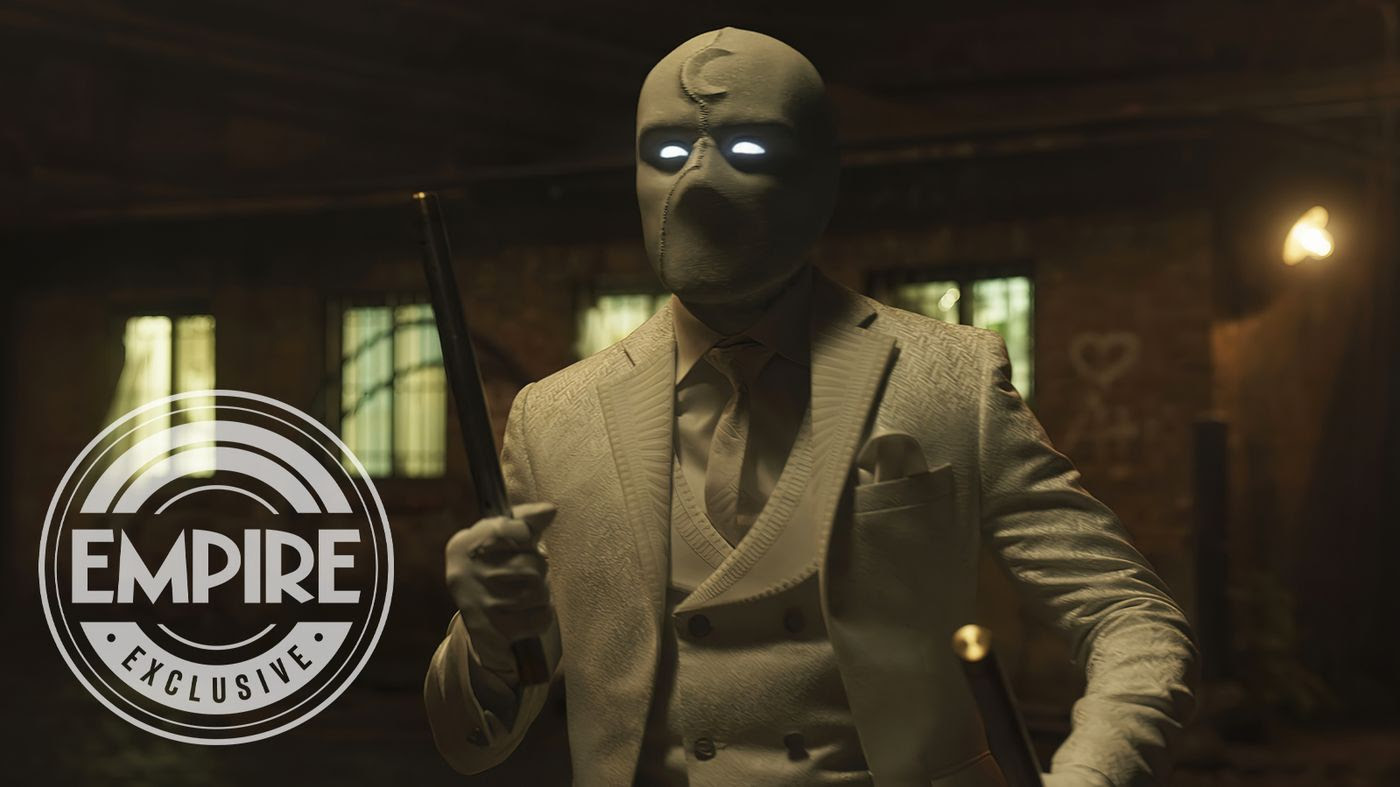
I came across this photo from the forthcoming MOON KNIGHT streaming show the other day:

moon-knight-excl-3.jpg

I invented the “white suit” Moon Knight visual with artist Michael Lark on an issue of SECRET AVENGERS, which I later redeveloped into the “Mr. Knight” persona with a look evolved by Declan Shalvey and Jordie Bellaire on our 2016 MOON KNIGHT run. Which appears to be out of print, but still available on Kindle (UK) (US).

The photo here is clearly the Declan look.

(Incldentally, on that run Jordie made one of the most intelligent and brave choices I’ve ever seen a colour artist make on a mainstream comic – she took all the colour off Moon Knight himself. That might seem a minor thing to you, but, if you have access to that run, take another look at those pages.) This was a really weird thing to trip over this week. That’s Dec’s design and, it feels, even his shading and folds.

I still have fond memories of those six issues of MOON KNIGHT, not least because I got to do a rare personal thing within the work. It was, on one level, a tribute. Each of those six issues has a thematic link back to an episode of the original run by writer Doug Moench. Doug Moench created Moon Knight with artist Don Perlin for an issue of WEREWOLF BY NIGHT in 1979, and reconceived the character in a more heroic tone in a series of stories in the Marvel magazine-size anthologies of the period, Hulk Magazine and Marvel Preview. The artist for these was Bill Sienkiewicz, and, after forming a working partnership to evolve the character, they got to do Moon Knight as a monthly book. They did, I think, about thirty issues together. Sienkiewicz moved on, and Moench did a few issues with a new young artist before moving on himself a few months later. That new artist, by the way, doesn’t have a huge body of work, but it’s a very influential one. That artist is called Kevin Nowlan, and if you compare his early work to the early work of Jim Lee, you’ll probably see the connection. It was a personal pleasure when Kevin inked Bryan on our THE BATMAN’S GRAVE.

Doug Moench was one of the very few American comics writers I read regularly in my teens. For a guy who wrote adventure comics, his style was gloriously eccentric. He was clearly intelligent and cultured — he read like someone who’d done time in music journalism, someone who loved space rock as much as he loved James Bond. And, more than once in his career, he did things that really made you wonder what would have happened if someone had let Dennis Hopper make a Bond film. He could be prolix, but in a glorious way, and he could land a great short line right on a beat like very few others.

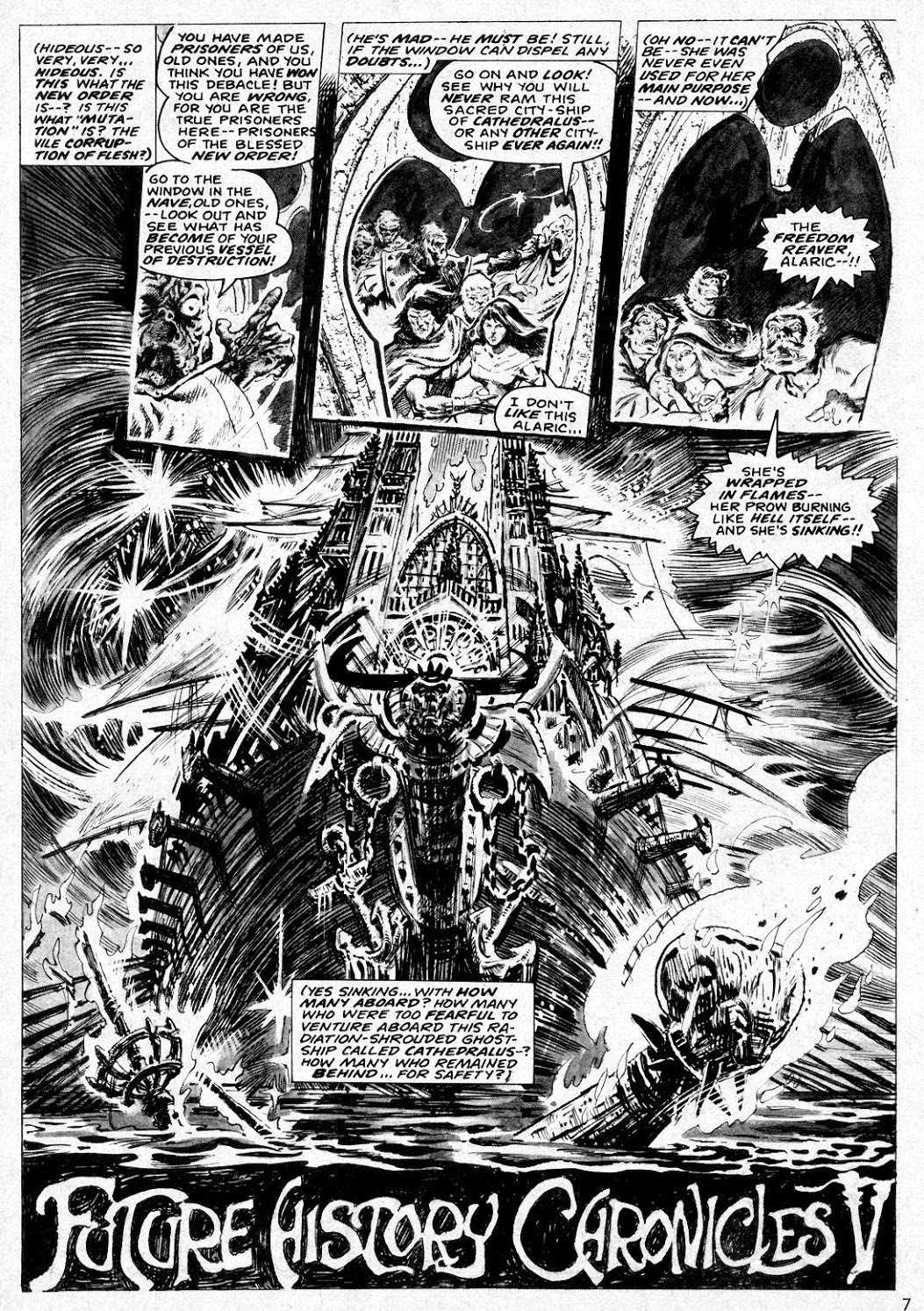
If you’re not aware of his work, you should do a bit of reading. He has a very odd comics career. In line with the more interesting writers of his period, he took the roads less travelled so he could have fun without people getting on his case. Take a look at this, from, I swear to god, his residency on the PLANET OF THE APES comic in the 70s:

apes.jpg

(Art there is by the magnificent Tom Sutton)

He was a writer of his time, which meant he had the constraints of the time, not the least of which was “all sound effects, all the time.” But, being the kind of writer he was, he thought about sound effects A Lot. This was a writer who clearly spent hours generating new and correct onomatopoeia for the sound of a window breaking or the sound of a key being turned in a lock. It may seem like a minor and even silly thing, but it denotes a writer who put serious thought into every aspect of the form of the time. The Marvel-style method did not allow for a writer to lead the page structure, for example, and in my first issue of Moon Knight I absolutely emulated the way he’d string a monologue across a large panel or full-page picture to enhance the pacing of the piece.

And, in fact, when he chose not to do that. Here’s the thing: a writer of his wordy style, immersed in the forms and tropes of the time, could still teach me to respect the artist as co-storyteller and as artist. A different writer of that time would have put two hundred words on that page. The page after this, in fact, is completely silent.

I remember his work into the late 80s of being slightly ahead of its time – MOON KNIGHT 26, “Hit It”, was probably the fullest collaboration between Moench and Sienkiewicz and reaches for a language of superhero comics that didn’t quite exist yet — and I suspect most people who entered the medium afterwards aren’t aware of their debt to him in creating new spaces and giving permission for new approaches in commercial comics.

Pretty sure the colour on these is by Christie Scheele, by the way. Again, Scheele was constrained by the demands of the commercial form of the time, as well as by the extremely, almost absurdly limited tools at her disposal. Christie Scheele moved on from comics to become an important American landscape artist. Check out her website.

Dusk Road
30 x 30 inches
Oil on linen with distressed / frayed edges – Christie Scheele

I’ve never spoken to Doug Moench. But I couldn’t do Moon Knight without finding some way to acknowledge his primacy as creator, or finding some small way to say thank you for the pleasure of reading his work. As I say. every episode of my Moon Knight was directly inspired by one of his.

All of which is to say, it’s nice to see Mr. Knight in the flesh, as it were, but I hope that show makes Mr. Moench’s name nice and big in the credits.

(An earlier version of this piece appeared in my weekly newsletter, Orbital Operations)

Comments closed

Just Wrote THE BATMAN’S GRAVE 9

As with most work notes, just a log for myself: I just finished writing and filed issue nine of THE BATMAN’S GRAVE. Here’s a picture from issue 8, which I proofed the other day. Three issues to go. Unemployment beckons. So does sleep, and not doing a damn thing tomorrow other than sleep some more.

Comments closed

I Just Finished Writing HEAVEN’S FOREST

As with most work notes, just a log for myself: just filed the first draft of HEAVEN’S FOREST 108, the final episode of the season. So there’s nothing left but a rewrite and a polish of episode 1 because I thought of a tweak to add there. But, basically, all the heavy lifting is done, it’s off the board, the hard part is all over, and it’s in the hands of my poor co-directors to make sense of and turn into something worth watching.

I’m off for a whisky.

Comments closed